
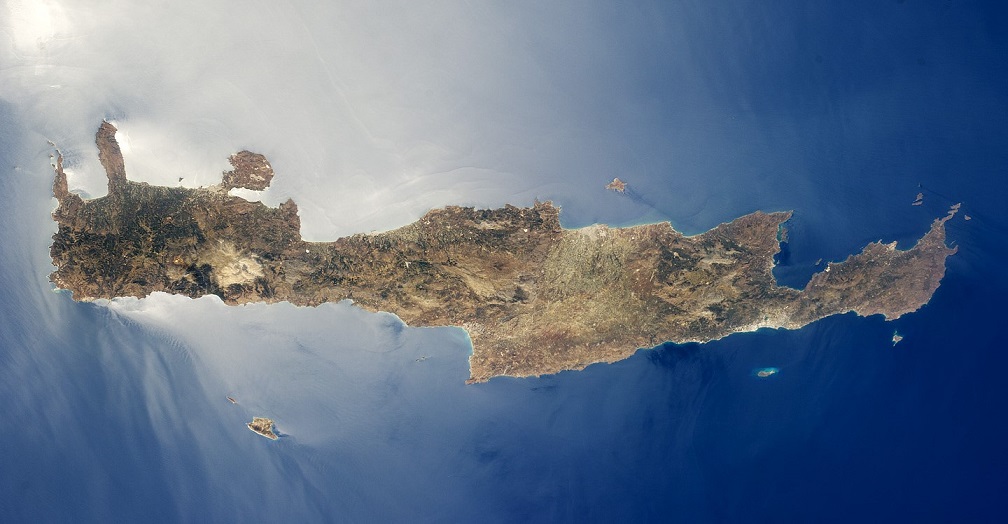
9 September 2022. Iraklio, Crete

It was quite late when we finally got to bed last night at our Airbnb in Iraklio. Therefore, we felt justified to sleep in today. Even Paul, who is not known for letting the moss grow when sightseeing is afoot, slept in a bit. Our digs for this stage of our trip – The Blossom Premium Living Residence – were superb, and just what we needed to recharge our batteries after yesterday’s pell-mell trip across Thessaly.

We managed to pull ourselves together by about 10 AM. The boys got some caffeine into them, and then we were off on the short hike to the Archaeological Museum of Heraklion. This museum is one of the oldest and largest in Greece, and is the world’s repository of cultural artefacts from the Minoan civilization. I’ve wanted to come here for a very, very long time.

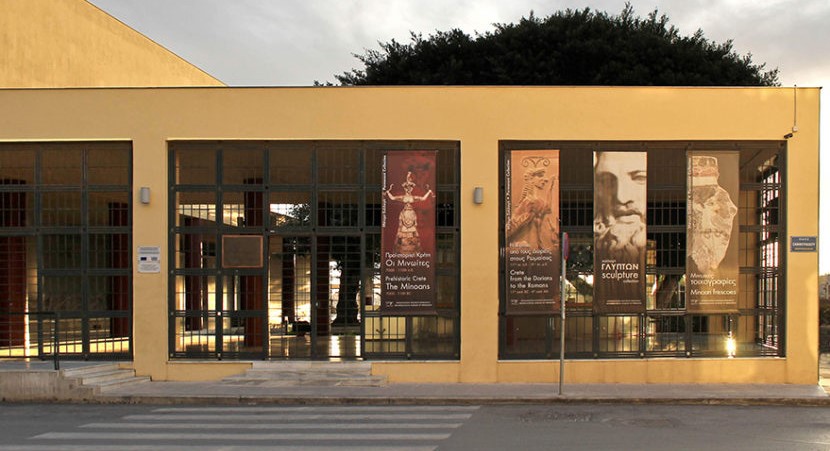
We were under a tight time constraint, and so we had to hurry from exhibit to exhibit. In each and every room, I saw artefacts that I had only seen in photographs in one book or another over my lifetime. It was, quite frankly, overwhelming. I know that I missed things despite taking hundreds of photos over the span of an hour. What follows is only a sampling.


Above is a collection of storage jars from across the island throughout the various Minoan periods. These items demonstrate that the Minoans were masters of naturalistic and geometric decoration. Below is a selection of gold seal rings depicting various stages of the Minoan religious cycle.


Ewers (above) have decorations of plant life and labryses, or double axes. Below, various examples of labryses.

The double axe was a sacred ritual tool in the Minoan religion. The labrys was not only a sacrificial tool, but the curve of the blade may have represented the curve of the bull’s horns.


The labrys was often paired with the bull (represented by bull rhytons, or offering vessels, above) and the so-called horns of consecration (below). The horns of consecration are found as architectural elements, as the one below was, and as objects of veneration and decoration.

“Meriones gave Odysseus a bow, a quiver and a sword, and put a cleverly made leather helmet on his head. On the inside there was a strong lining on interwoven straps, onto which a felt cap had been sewn in. The outside was cleverly adorned all around with rows of white tusks from a shiny-toothed boar, the tusks running in alternate directions in each row.”
Μηριόνης δ’ Ὀδυσῆϊ δίδου βιὸν ἠδὲ φαρέτρην
καὶ ξίφος, ἀμφὶ δέ οἱ κυνέην κεφαλῆφιν ἔθηκε
ῥινοῦ ποιητήν: πολέσιν δ’ ἔντοσθεν ἱμᾶσιν
ἐντέτατο στερεῶς: ἔκτοσθε δὲ λευκοὶ ὀδόντες
ἀργιόδοντος ὑὸς θαμέες ἔχον ἔνθα καὶ ἔνθα
εὖ καὶ ἐπισταμένως: μέσσῃ δ’ ἐνὶ πῖλος ἀρήρει.
— Homer, Iliad 10.260–5

The museum has on display a boar’s tusk helmet and bronze spear head and butt spike (left and below) which were found in a high-status warrior burial within a chamber tomb at Knossos. The helmet is an example of the type of antique armor which Homer ascribed to the Bronze Age heroes about which he wrote in the Iliad.
The Meriones about whom Homer wrote was also a high-status warrior from Crete. The connection between the two may be coincidental, but that doesn’t keep it from firing one’s imagination.


This post is going on a bit longer than I had hoped for, so I’ll continue the write-up of the Archaeological Museum of Heraklion in my next missive.
— Να εχεις μια ωραια μερα. —
Leave a Reply